The True Cost of a Private Pool in the Algarve: Install, Upkeep and Value
ICON Property
A pool sells the dream. In a region with around 300 days of sunshine, a private pool is close to the default expectation for a villa, and the photograph of blue water against white walls is what stops the scroll. But a pool also carries a running cost that most buyers underestimate, sometimes badly, and a paperwork requirement that many forget entirely. Understanding the true private pool cost in the Algarve, from the day you install it to every year you own it, is the difference between a feature you enjoy and a bill that nags. This guide breaks down installation, licensing, upkeep and the honest truth about value.
What a pool costs to install
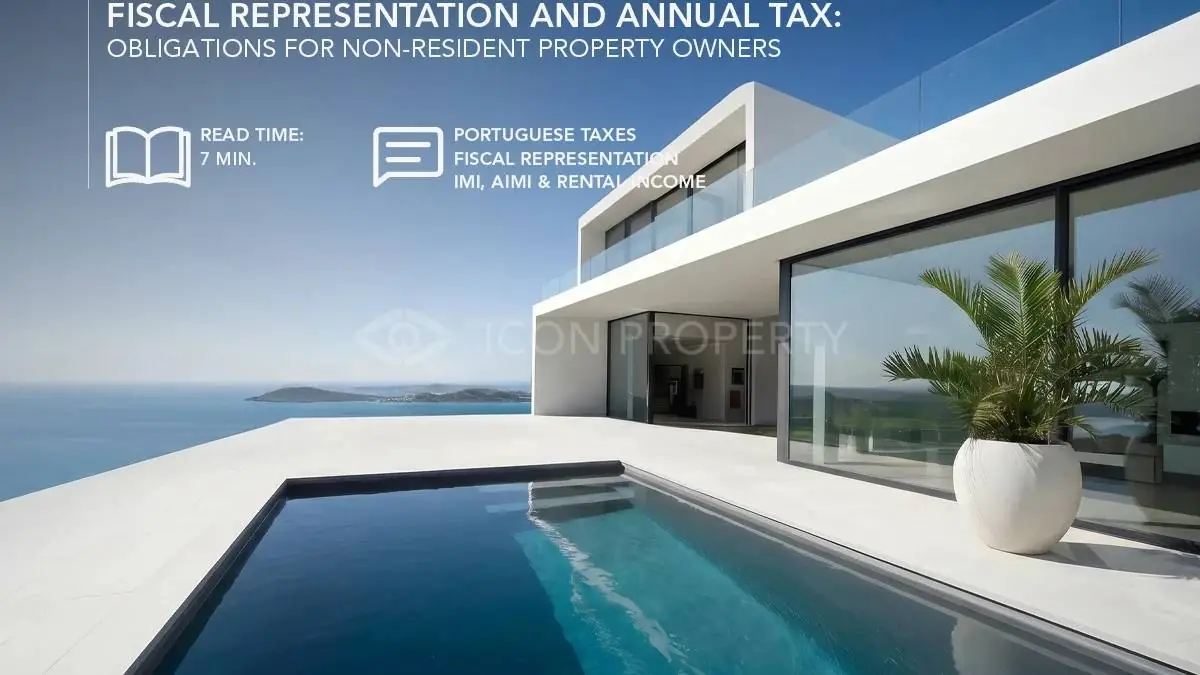
Installation prices vary widely by type and material. An above-ground pool can be as little as 2,000 euros and up to around 12,000. A conventional in-ground pool usually ranges from around 15,000 to 35,000 euros depending on the material, while an in-ground infinity pool, the one everyone wants over a sea view, more typically runs from 25,000 to 60,000 euros. Material drives both cost and lifespan: fibreglass tends to fall between 10,000 and 30,000 euros and lasts decades, while a concrete pool ranges from around 15,000 to 40,000 euros and can last 30 to 50 years. Then come the extras that quietly inflate the quote, from LED underwater lighting at 500 to 2,000 euros to an automatic safety cover at 3,000 to 8,000.
What drives the private pool cost in the Algarve
Four things move the number most: size, material, whether you want an infinity edge, and how you plan to heat it. A compact fibreglass pool is a modest, predictable spend. A large bespoke concrete infinity pool with heating, automatic cover and integrated lighting is a different project entirely. Decide the specification with resale in mind, because in the Algarve villa market a well-proportioned pool is an asset, while an oversized or over-engineered one is mostly a cost.
The licence: the line item people forget
Before any of the above, one point that gets missed far too often: a swimming pool is building work, and it needs authorisation from the Câmara Municipal. Depending on the municipality and the scale of the project, that means either a licensing process or a comunicação prévia, usually with drawings prepared by a technician, and it ends with the works being registered against the property.
This matters twice over. On a new pool, skipping it is a false economy, because the pool eventually has to appear on the property's records. On a purchase, it is one of the most common problems a buyer's lawyer finds. A pool added by a previous owner without permission becomes your liability the moment you sign, and regularising it after the fact costs far more than doing it properly would have. It sits alongside unlicensed extensions and converted garages in the list of things to check before you commit, which we set out in full in our guide to property due diligence in Portugal.
If you are buying a villa that already has a pool, ask one question early: was it licensed, and does it appear on the Caderneta Predial? If the answer is vague, treat it as a real issue rather than a formality.
Water, and why it is a live question in the Algarve
A pool needs filling, and topping up through the summer. If your villa is on mains water that is simply a bill. If it depends on a borehole, it is a licensing question too, and one that has moved twice in recent years.
The current position is better than it was. In May 2026, after the 2025/26 hydrological year restored water tables across the region, the APA lifted its freeze on licensing new groundwater abstractions across the Algarve river basins. Two exclusions remain: the Campina de Faro to Vale do Lobo subsystem, and the coastal critical abstraction area maintained to prevent saltwater intrusion. The APA was careful to note that the recovery is "not homogeneous or structural", so treat this as a favourable moment rather than a settled one, and check the position for your specific property before you assume a borehole is an option.
The running costs most owners underestimate
This is where budgets go wrong. A proper weekly maintenance contract, covering chemical balancing, brushing, filter checks and inspection, typically costs around 1,800 euros a year on its own. Running the filtration pump adds roughly 600 to 1,100 euros of electricity annually. Chemical consumption then spikes through July and August, when the pool is used hardest and the sun is fiercest. Add it all up and, for a standard 8 by 4 metre private pool at a Lagos villa in 2026, the combined annual running cost usually lands somewhere between 2,800 and 4,200 euros. The common mistake is to budget only the cleaning contract, which is why owners routinely underestimate the total by 40 to 60 percent. Heating the water with a heat pump, so you can swim beyond the warmest months, adds meaningfully to the electricity bill on top of these figures, as does topping up water lost to evaporation in high summer. It all belongs in the same budget as your other ownership costs, which we set out in full in the true cost of owning an Algarve villa.
How to cut the running cost
The good news is that the biggest costs are also the most controllable. A variable-speed filtration pump uses a fraction of the electricity of an older single-speed unit. A cover, whether a simple thermal blanket or an automatic system, dramatically reduces both evaporation and heat loss, cutting water top-ups and heating bills at the same time, which matters more than ever given how tight the region's water balance can get. And because the Algarve is one of the sunniest places in Europe, solar is the obvious lever: solar panels can offset the pump and heat-pump load, turning your sunshine into lower bills, a payoff we explore in solar power and tax savings on Algarve property. Efficiency choices like these are increasingly what buyers look for, part of a wider shift we cover in why energy efficiency sells.
Does a pool add value?
Yes, but it is more nuanced than a fixed percentage. In the Algarve, a private pool is one of the strongest demand drivers there is. A villa with a good pool lets more easily, commands stronger holiday rates, and sells faster than an identical home without one, to the point where, in much of the villa market, buyers simply expect it. The honest framing is that a pool protects saleability and rental appeal rather than adding a guaranteed sum to the price.
One caveat on that. The value only holds if the pool is legal. An unlicensed pool does the opposite: it complicates the sale, gives the buyer's lawyer something to negotiate against, and can delay completion while it is regularised.
Weigh the running cost against the return: on a Lagos villa generating 55,000 euros of gross rental income, a 3,500 euro annual pool bill is only about 6 to 7 percent of revenue, a reasonable price for a feature that helps fill the calendar. Buyers also increasingly filter for a pool from the very first search, so an otherwise lovely villa without one can sit noticeably longer on the market. For a permanent home, the value is simpler still: it is the reason you moved to the Algarve in the first place.
Enjoy the dip, budget the reality
A private pool is one of the great pleasures of Algarve living and one of the smartest features for rental appeal, provided you go in with your eyes open. Check the licence before you buy or build, price the installation for the specification you actually need, budget the full running cost rather than just the cleaning contract, and use covers and solar to keep the bills in check. Do that, and the only thing left to think about is when to get in.
Looking for a villa with a pool that fits your budget and your rental plans? Contact ICON Property's team for a personalized viewing tour, and we will factor the real running costs, and the paperwork, into every property we show you.
Frequently asked questions
An above-ground pool runs from around 2,000 to 12,000 euros. A conventional in-ground pool typically costs 15,000 to 35,000 euros depending on the material, and an infinity pool more commonly 25,000 to 60,000, before extras like heating, lighting and a cover, and before licensing and technical fees.
Yes. A pool is building work and requires authorisation from the Câmara Municipal, either through a licensing process or a comunicação prévia depending on the municipality and the project. The works should then appear on the property's records. Unlicensed pools are one of the most common problems found during due diligence.
For a standard 8 by 4 metre pool, budget roughly 2,800 to 4,200 euros a year once you include a weekly service contract, filtration electricity and chemicals. Heating and summer water top-ups add more, and many owners underestimate the total by 40 to 60 percent.
Yes. Heating with a heat pump lets you extend the swimming season, but it adds significantly to the electricity bill on top of standard running costs. A cover and solar panels are the most effective ways to keep that extra cost down.
It strongly supports value by boosting saleability and rental appeal, and in much of the villa market a pool is expected rather than optional. It is best seen as protecting demand and rental income rather than adding a fixed percentage to the sale price, and only if it is properly licensed.
Fit a variable-speed pump, use a cover to cut evaporation and heat loss, and add solar panels to offset the pump and heating load. In the Algarve's climate, solar in particular can meaningfully lower the annual bill.